Enforcing Independence

ind learnerYears ago when I was first a postgraduate I worked for a widening access and widening participation project called On Track. We’d go into FE colleges in teams of two (usually a PG and a UG) and run sessions for students aimed at “facilitating the transition between FE and HE”, and we often talked about giving a “warts and all” guide to HE. A lot of what we did was study skills, but the students loved it because they got to talk to real students about what it was like to be at university. One of the first acetates (remember them?) in the tutor pack was one entitled “The Independent Learner”. Sadly the project is defunct and my acetates have been binned, and the image is very out of date anyway. It had the text “the independent learner” in the central oval, the middle oval contained all the words to do with studying and assessment and the outside oval contained the skills On Track could teach.

rhizo14 imageDave’s topic this week in #rhizo14 is called Enforcing Independence and that reminded me of On Track and all the talk about the independent learner there.   I’ve recreated a version of the acetate to express how most of us are feeling about this course.  Where do I look for inspiration?  How do I process it?  Luckily we’re not alone, we have the network of others in the course and a variety of places (Facebook, Twitter etc.) to chat to each other.  It strikes me how different this is from the independent learners we envisaged back in the days of On Track, though – it’s a whole different world nowadays.

Posted in #rhizo14, Rhizomes, Social Media | Tagged , , | 2 Comments

Cheating as learning: the story so far

So that’s the end of the first week of #rhizo14.  I’ve made new friends, thought of new things and had one of the most wonderfully inspiring weeks ever. As I said on Saturday night:

Yesterday Dave Cormier shouted out for posts which summarised the week. I was busy writing about D&G for my supervisors (serendipidously) so I didn’t have time but I want to capture in words the sense of euphoria I have felt this week. I’ve talked more about D&G than I have for a long time, I’ve read loads of blog posts by other nomads in #rhizo14 that have sparked off new ideas in my head, and I am thinking more clearly about my own thesis now.

rhizo14 imageI still don’t agree with the theme of learning as cheating – I share Jenny Mackness’ concerns about the ethics of cheating.  I’ve spoken to@AnnGagne about referencing and plagiarism being cultural and to @FrancesBell about gardening and knitting and puffins.  This image is a representation done by Felicia Sullivan and shared in the Facebook group: I think it’s lovely.

Looking forward to week 2 🙂

There’s also a Word Garden here:

AnswerGarden: Rhizomatic Learning: what word comes to mind?

Posted in Learning, Rhizomes, Social Media | Tagged , , , , | Leave a comment

On Cheating

In the introductory video to #rhizo14 Dave Cormier talks about cheating and asks how this might be usefully applied to learning.  He defines cheating as taking an answer that is not mine, and discusses in a bit more detail some implications of this way of looking at things.

He then describes his classroom design and says that he puts students together so that they have to “cheat”, by which he actually means that they have to collaborate, because there is no way that any of them individually can come up with a right answer.  This sounds strikingly similar to the Jigsaw Technique, which is a model for co-operative learning which I use in my Philosophy tutorials at the University of Glasgow, where groups of tutees are all given part of a topic which they must teach to the rest of the class, so that by the end all of the class have taught or been taught the whole of an answer. They collaborate in teaching and learning that answer, but each individual student writes their own set of notes, so no two answers will be identical.

However, I don’t think that this is the same as cheating, because I think that Dave’s definition above was not complete enough for its purpose.  I do think that cheating is taking an answer that is not mine, but I think that it importantly I cheat if I try to pass it off as my own.   That’s often the difference between plagiarism and academic referencing, it’s what crude “originality checkers” such as Turnitin try to catch, but I don’t think that’s what’s going on with collaborative learning.

I do think (and am arguing in my PhD thesis) that we need to examine our attitudes towards collaboration if we’re going to use it meaningfully in formal education, and I think particularly that one’s epistemology is likely to affect one’s liking for or distrust of methods such as Jigsaw, Patchwork Text, and even for projects such as Wikipedia.  Kenneth Bruffee has some interesting thoughts about types of knowledge which I do not totally agree with, but which are stimulating, particularly when he compares writing to a pueblo – i.e. authorship is not always (ever?) easy to ascertain – and this sort of thought is running through my head when I think about rhizomatic learning.

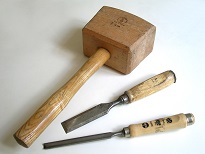
hammer

So I don’t think that Dave and I are actually disagreeing deeply, but I do not find his choice of word to be useful.  He’s probably chosen it to be disruptive, and to provoke us all into talking – and that’s a good thing.  Like Nietzsche, I also like to philosophise with a hammer.
I was also reminded of this from Massumi’s introduction to A Thousand Plateaus: “A concept is a brick. It can be used to build the courthouse of reason. Or it can be thrown through the window.”

Image by Janekpfeifer (Own work) [GFDL (http://www.gnu.org/copyleft/fdl.html) or CC-BY-SA-3.0 (http://creativecommons.org/licenses/by-sa/3.0/)], via Wikimedia Commons

Posted in MOOC, Rhizomes | Tagged , , , | 2 Comments

#rhizo14 week 1

I’ve signed up for a rhizomatic course about rhizomatic learning and I’m loving it so far.  The first video talked about “cheating” and collaboration, and immediately sparked thoughts about Jigsaw learning (which readers may remember is a technique I use in my tutorials, and is also something I am studying for my PhD in collaborative learning).  So far this is my favourite quote:

“From a rhizomatic aspect you’re not saying that knowledge is fixed. As a teacher you have to accept that you are no longer in charge of the knowledge, but instead in charge of the class.”  John Dakers, here

I think I’ll be using that quote a lot in my writing.

Posted in Learning, MOOC, Rhizomes | Tagged , , , , , , | Leave a comment

The Spirit of the Age?

I’ve just spent a while creating a blog post for my official uni blog only to find that the ability to embed YouTube is not enabled on the site 🙁 I was already grumbly and mumbling about corporate capitalists and that just epitomised everything that was making me grumpy, but it’s Saturday night, pizza is being made and I am not going to spend the rest of the evening annoyed so I’ll reproduce my post here:

It’s my final weekend off before going back to work on Monday after five weeks off and, as usual, I have left my marking till the last minute.  I marked a few earlier, took a wee break to look at Twitter and this article by TES popped up.  Having just struggled to decipher a particularly scrawly script, I was muttering to myself about the ridiculousness of hand written exams in the 21st century, but not for the reasons stated in this article (one of which is to ensure students can use a computer).  I’m getting more and more annoyed about the emphasis put on “graduate attributes” and “employability”, and finding it hard to articulate my concern without appearing elitist, but I do not think that universities have a duty to employers to turn out perfectly trained clones and I think that this is getting missed in the rhetoric.  I’m not saying that universities shouldn’t help to prepare students for life after university, but any expectation (by employers) that HE will provide all the training needed as well as the education should be challenged, as should the idea that politicians and employers should have a say in how and what we are teaching.  As ever, when I think about these issues, Hawkwind’s Spirit of the Age is playing in my head.

It’s all wonderful, but this is the most relevant part for me:

I am a clone, I am not alone
Every fibre of my flesh and bone is identical to the others
Everything I say is in the same tone
as my test tube brother’s voice
There is no choice between us,
If you had ever seen us,
You’d rejoice in your uniqueness
and consider every weakness something special of your own
Being a clone, I have no flaws to identify
Even this doggerel that pours from my pen,
has just been written by another twenty telepathic men

http://www.metrolyrics.com/spirit-of-the-age-lyrics-hawkwind.html

Image by: By Bill Ebbesen (Own work) [CC-BY-SA-3.0 (http://creativecommons.org/licenses/by-sa/3.0)], via Wikimedia Commons

Posted in Academia, Music | Tagged , , | Leave a comment

Another blog

UG logo Recently my University set up an official blog for Uni staff.  I haven’t quite worked out how to use it yet (as in, what I should be posting), but it makes sense to have something a bit more official for my work-related stuff.  It’s not got such a cool name as this one, but here it is 

Posted in Academia, University | Tagged | Leave a comment

Quack quack

Willow duckRecently I became a great aunty (yeah, I know, I’ve always been a great aunty, ask my nephews and nieces, haha).  Luke and Sarah love ducks, so I made this wee hat and bootees for Willow.  Doesn’t she look sweet?

Posted in knitting | Leave a comment

Spies Are Reading My Blog (David Rovics)

I’ve just downloaded David Rovics‘ latest album Spies Are Reading My Blog and am listening to it while Niall makes pizza.  There’s some great tracks, so far the title track is my favourite.  I subscribe to David, which means I’ve agreed to pay $50 per year to support him in his music making.  As a result I get all of his music for free, free entry to all of his gigs and a warm, fuzzy feeling for doing something nice.  This is another of my favourites:

Posted in Activism, Music | Leave a comment

Duck-rabbit

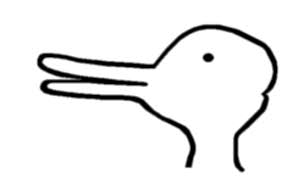
duck rabbit orig

I have a very talented friend called Katy, who studied Philosophy at Crichton campus and heard about Wittgenstein’s duck-rabbit.  Here is it from the original  Philosophical Investigations II, XI (p194).  Wittgenstein is talking about the difference between “seeing”and “seeing as”, (or “continual seeing” and “dawning”) and this picture is meant to be an illustration of the way that we can only see something as one thing at once, though there may be different ways of seeing it.

duck rabbit 2

I’ve always had a problem seeing this as a rabbit at all, but Katy drew this instead.  Now that’s a duck-rabbit!

Posted in Philosophy, Wittgenstein | Tagged , , | 4 Comments

Dichotomies

netI like making lists, and I also like making tables.  I know that the world’s not really black and white, but I taking an idea and looking at it in two ways – I like dichotomies.  I’ve been playing around with Deleuze and Guattari again, as well as thinking about MOOCs, and I’ve had this written on one of my white boards for weeks now, inspired partly by A Thousand Plateaus pp 18-21

Knowledge

Rhizomatic Arborescent
East West
Mapping Signifying
Performance Competence
Continental Analytic
Coherentism Foundationalism
cMOOC xMOOC

There’s more than two ways of looking at things, and this is too stark, but it’s helping me to sort out how different theories might mesh together.

Posted in Learning, MOOC, Philosophy, Rhizomes, Writing | Leave a comment